









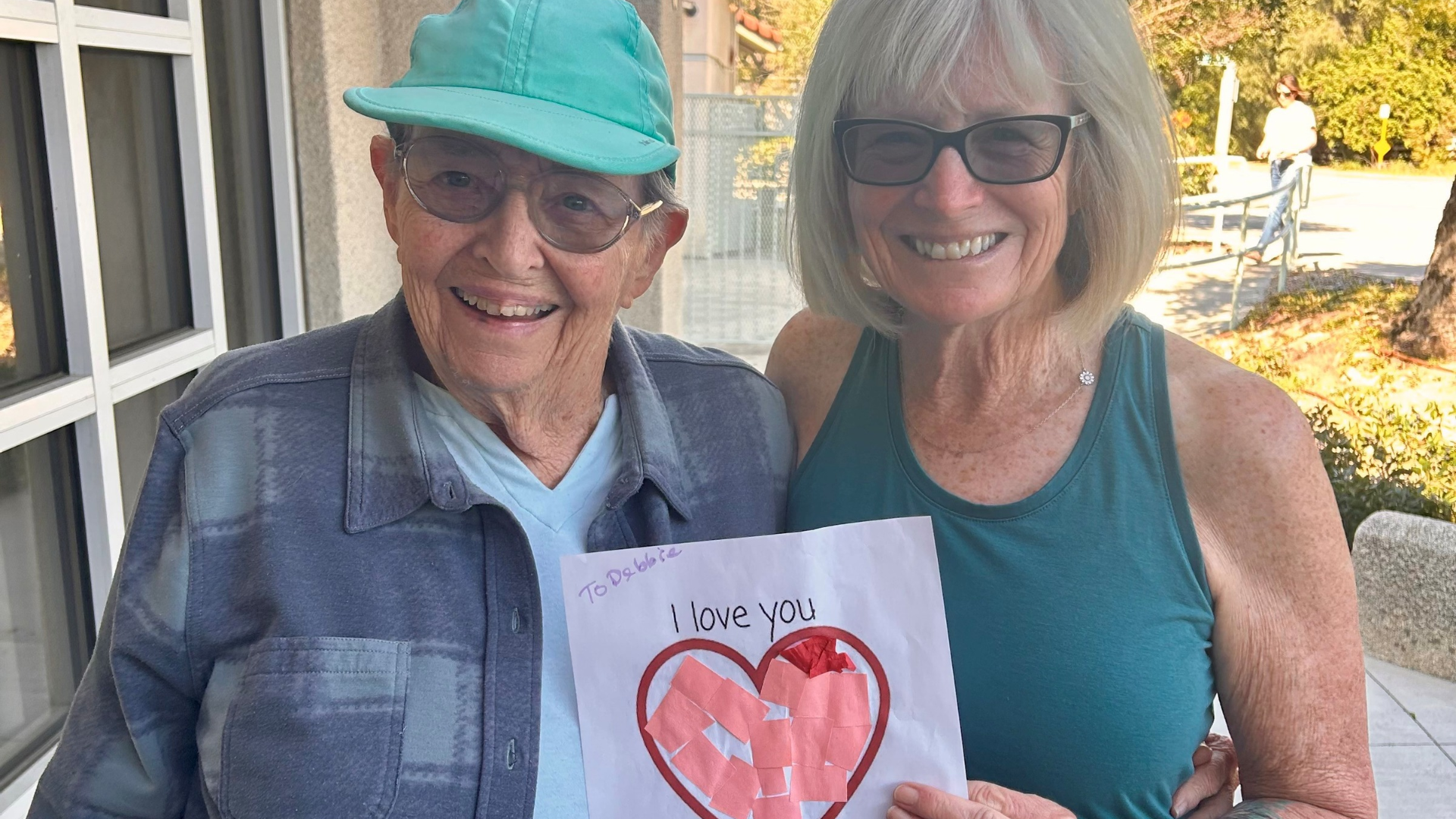
When Debbie was caring for her mother, Louise, at home, her mother’s doctor recommended exploring an Adult Day Program. Debbie was unfamiliar with these programs but was grateful to discover one close to home at Senior Concerns in Thousand Oaks.
Like Debbie, many families are unaware that there is another care option beyond hiring an in-home caregiver or moving a loved one into a residential care facility. Adult Day Programs offer a valuable alternative. These licensed facilities provide social engagement, personal care, and supervision for adults with cognitive or physical impairments. Participants can continue living at home while spending part of their day in a safe, supportive environment where they can enjoy activities, build relationships, and receive the care and supervision they need.
There are many reasons an Adult Day Program may be a good fit for an individual and their family. For Debbie, the benefits were twofold.
For her mother, the program provided opportunities for independence, social connection, and a renewed sense of belonging. Debbie shared, “The day program helped my mom feel independent and build relationships with others besides her family. My mom thrives at Senior Concerns, where activities help her feel accepted, valued, and included. It truly is her ‘happy place.’”
For Debbie, the program offered something equally valuable: “the gift of time.” Knowing her mother was in a safe and caring environment allowed Debbie to schedule appointments, run errands, go to the gym, meet friends, or simply take time to relax without worrying about her mother’s care.
Debbie also described how the experience changed the way she viewed her relationship with her mother: “The program has also helped me see Mom beyond my caregiving role. I love seeing her connect with others and participate in activities I never imagined she would like.”
In California, there are two distinct types of licensed adult day services.
The California Department of Social Services licenses the social model, known as an Adult Day Program (ADP). These programs focus primarily on socialization, recreation, personal care, and supervision.
The California Department of Public Health licenses the medical model, known as an Adult Day Health Care (ADHC) Program. These programs provide additional health-related services, which may include physical therapy and occupational therapy. ADHC programs may also bill Medi-Cal, California’s Medicaid program, for eligible covered services.
As with any care arrangement, families should take the time to research their options, ask questions, and determine whether a particular program is appropriate for their loved one. It is not unusual to feel hesitant about trying a new program, especially when a loved one may not be able to speak up for themselves.
Schedule a tour and ask questions to help you feel comfortable with the program and its staff. Ask about the staff-to-client ratio, what special diets the program can accommodate, how activities and services are tailored to your loved one’s needs, and how the staff assesses whether the program is a good fit. Be sure to understand the enrollment and paperwork requirements. All licensed facilities require certain documentation for enrollment, including a physician’s report and a TB test.
It is also important to check the facility’s licensing history. Families can contact the appropriate state licensing agency or visit its website to review inspection reports, complaints, and any documented licensing violations.
When asked what she wished more people understood about Adult Day Programs, Debbie emphasized the positive impact they can have on both participants and their families.
“Adult Day Programs are an amazing resource that offers valuable support for both participants and their families. They provide a safe, engaging, and stimulating environment where participants thrive while providing caregivers with respite. A little patience may be needed during the initial adjustment period, but working through those moments is definitely worth the benefits of participation.”
Finding the right care for a loved one can feel overwhelming. Adult Day Programs may provide an opportunity for individuals to remain at home while enjoying meaningful activities and social connections. At the same time, they give family caregivers much-needed time to attend to their own needs and responsibilities.
Being an informed consumer is essential when making any care decision. Take the time to explore your options, ask questions, and visit programs in your community. Don’t let uncertainty or fear prevent you from discovering what could be a wonderful resource for both you and your loved one.
Martha Shapiro can be reached at Senior Concerns at 805-497-0189 or by email at mshapiro@seniorconcerns.org.